Salkafar
Member++
-
Joined
-
Last visited
Everything posted by Salkafar
-
But that would be like dressing in a newspaper suit while it's raining...
-
Too bad about the chrome nipples, but then they couldn't light up...
-
He'd still lose. Uncle Sam does not have quantifiable super-powers.
-
Very, very poorly. Archanfel knows the truth about the human race: it was created for a purpose, and that purpose does not include freedom - only battle. In the context of 'The Guyver', Uncle Sam's existence is based on a lie. And that knowledge is on the table now, although it's still not entirely clear to me how many people in the world actually know the whole story.
-
Superman can't bond with a Guyver: his biology would not allow the bonding process. His cells are super-strong, after all...
-
I am still in the dark about the role of women in Chronos' world. Because we still haven't seen a single undisputed female Zoanoid transformation. Maybe they don't turn into super-warriors but super-breeders, who can give birth to twelve children every time... ...I am only half joking. It would make absolute horrible sense. One of the qualities the Creators desired in humans was rapid reproduction, after all.
-
We won't have to wait as long this time. https://otakumode.com/news/59f5d75fc3bf89780d1cdb9f/Attack-on-Titan-Anime-Season-3-Confirmed-for-Summer-2018
-
...So this just went away, did it? Isn't this completely weird? One moment Korea is on the brink of firing nukes as Korea, Japan and the USA, the next... silence.
-
Agree with your points mostly except for this: How could the frequency blades cut adamantium? They put out destructive vibrations at a molecular (or crystalline, I guess) level, but it's still a function of kinetic energy. The whole point about structural integrity is applying kinetic energy to disrupt it, and the whole deal of adamantium is that applying sufficient kinetic energy to tear it apart is not possible. Not by natural means, anyway.
-
...Given the absurd power levels over at DC (even back in '92) I don't think the Guyver could win this under any set of circumstances. Doomsday's only power at the time of his introduction was blunt force trauma, but it would be enough. He could shatter the control medallion with a single punch... and he'd only have to get lucky once. I wonder if even the frequency blades could cut him.
-
Actual size? Goodness.
-
Shadow King would be a terrible adversary for Archanfel. He's naive, emotionally vulnerable and inexperienced. Farouk would destroy him.
-
Be welcome. I should warn you though, we're kind of down at the moment since we haven't gotten any new Guyver chapters in over a year and we don't know why.
-
Yikes. Is that true? Bad form.
-
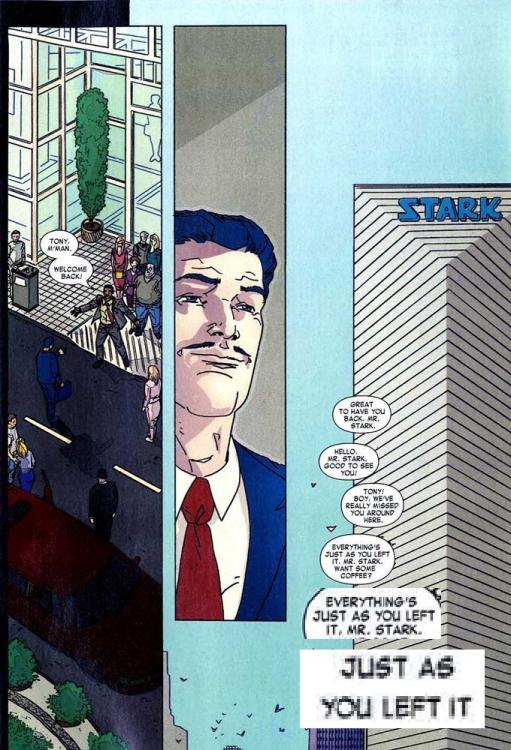
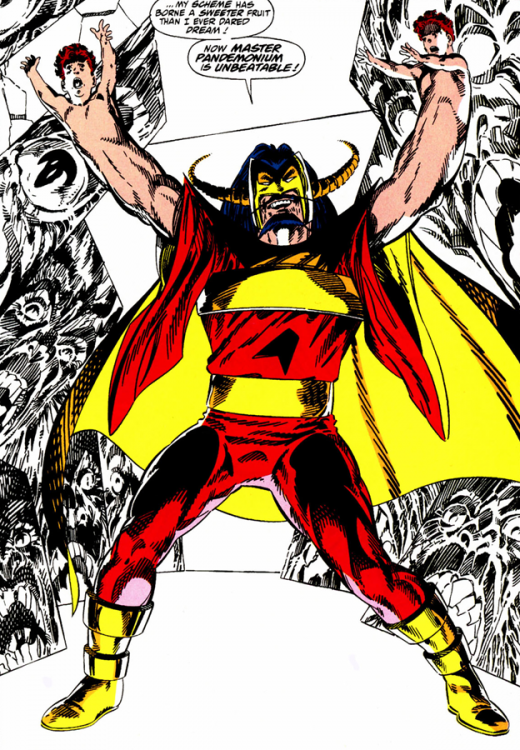
Avengers disassembled... I mentioned before that, around 2000, it felt like darkness had crept into the Marvel Universe. The first waves were hitting in 2004. It really started with 'Secret War'... a mini-series which had nothing to do with any of the famous 'Secret Wars' titles, but rather was a self-contained story written by one Brian Michael Bendis, a name which would resound awesomely and ominously in the future. In this tale, Nick Fury - the head of SHIELD - uses brainwashing and secret alien technology to have a cadre of unwitting super-heroes perform an invasion into Latveria for him. The repercussions lead to Nick Fury being fired, becoming a wanted man and going deep underground. In retrospect, this is what truly started to set things off further down the line. But Nick Fury being taken off the board had nothing directly to do with 'Avengers disassembled'. That happened because of the Scarlet Witch. The Scarlet Witch - Wanda Maximoff - had been an Avenger for a very long time, although she had first appeared in the pages of 'X-Men' - as a follower of the evil Magneto. Soon, however, she turned against him, and ended up joining the second iteration of the Avengers. For many years, she served as a heroine, developing her hex powers until she could actually use magic - growing more and more powerful. Along the way, she met, and eventually fell in love with, the Vision. She even ended up marrying him. The problem here was that the Vision is an android - an artificial man - and cannot father children, a strong desire for the couple. But the Scarlet Witch's powers, which bend reality, allowed her and the Vision to have children after all who were a fusion of the essence of their parents - even if they were different life forms. Things went horribly wrong when, soon after, Master Pandemonium came calling. Pandemonium was an envoy of Mephisto, the Devil himself, who sent him out on a mission to reclaim the five pieces of his soul (Only later was it revealed that Pandemonium had been tricked - it was not his own soul he was looking for, but the scattered pieces of Mephisto's demonic soul). Pandemonium claimed that the two infants, who had been magically created, were the accidental product of the Witch's spell 'pulling in' two of his soul shards, which now gave them life. He reabsorbed them, returning them to Mephisto himself, and the trauma of the shock - combined with a spell from fellow witch Agatha Harkness - caused the Scarlet Witch to forget she had ever had children. <<pant, pant>> Yeah, it's a history lesson and a half. That happened in 1989. However... many years later... in 2003 and 2004... Some people think the catalyst, in-story, was another mini series: JLA / Avengers. This crossover between the two publishing houses involved, among other things, the Scarlet Witch travelling through the DC universe for a while. In that universe, 'Chaos Magic' - traditionally the magic she uses - is far, far stronger than in the Marvel universe; and while it made her a more formidable adversary for their rivals, it also started to affect her mind. Months later, Brian Michael Bendis... that name again... wrote 'Avengers disassembled'. It described 'The worst day in Avengers history' - a series of devastating attacks on Avengers mansion and elsewhere by their worst enemies of all time, all in a matter of hours, while the Avengers suffered devastating blows in their own issues as well. Several Avengers were killed, the mansion was devastated, the team's reputation took a serious blow and in the end it turned out it was all the work of the Scarlet Witch. Wanda had gradually, if not consciously, come to remember she had once had children, and blamed the Avengers for losing them; now she was using her reality-altering powers, which were more powerful than ever before, to destroy the Avengers and create a new and better reality for herself. It all ended with her completely psychotic and being taken away by her father Magneto to get comfort and treatment, the Avengers disbanding and the members at various levels of trauma and guilt - Thor got the worst of it all, since in his title Ragnarok happened for the final and definitive time, and he, Asgard and his people actually died (and Thor remained dead for several years, which, these days, is unheard of). These seemed the darkest times Marvel had ever seen. ...But, as the bard wrote, "...the worst is not so long as we can say 'This is the worst'." *** What did 'Disassembled' mean for Iron Man? What fate struck the Golden Avenger in his own book? Well... the first thing that happened was when the Secretary of Defense appeared at the United Nations to hold a speech. Unfortunately, he was drunk and became offensive and aggressive. For some reason, when he is drunk, Tony is depicted as a mean drunk. It doesn't take a lot to get him drunk, and when he is there, he swiftly loses coordination and all inhibition. This was different though. He appeared in his armor, clearly inebriated, and swiftly started to make accusations and threats out of the blue - culminating in abusing and actually threatening the Latverian ambassador, stating the desire to blast him to atoms on the spot. This actually happened in the 'Avengers' book. Tony was asked to step down as defense secretary pretty much immediately, which made sense after the incident... but the weirdest aspect of all was that he was not drunk. At all. He hadn't drunk a drop. He only felt and behaved as if he were, at the worst possible moment in the worst possible way. And he lost everything. Of course it was revealed later that it was Wanda's magic "punishing" him for being "complicit" in the "conspiracy" to keep the fact she had had children once a secret from her. In any case, Tony losing his position happened between issues... so in the 'Disassembled' issues of his own book, he started out already disgraced and dismissed. That was bad enough. Then, even as the incident is all over the news, Iron Man appears at the board of directors at Stark International... and massacres all present, causing the company's ownership to somehow revert to Tony. Pepper Potts only escapes through sheer chance. The story as it proceeded was interspersed with flashbacks to Tony's relationship with Rumiko (which had effectively ended a while before) as well as to a Clarence Ward, an absurdly slimy business man who was immediately revealed as a traitor selling weapons of mass destruction to Al-Qaida. Iron Man had stopped his operation, and Ward had been believed dead in an explosion which destroyed the villains' base. When the imposter Iron Man attacked Tony Stark's mansion, he instead found Rumiko there, who had returned to support Tony in his time of need. For her trouble, she got zapped with an electric blast, and Tony Stark arrived just in time to watch her die. The murderous Iron Man gloated and revealed himself as Clarence Ward, who had managed to steal some of Tony's armor to commit murders in his guise and further disgrace the man he held responsible for his downfall. Tony managed to dodge his attacks long enough to armor up himself, and the two Iron Men took to battle. The government, understandably distraught at the idea of an out-of-control, murderous Iron Man flying about, had equipped a specialized strike team with the copied armors recovered from Sonny Burch's operation, and sent them to take Tony (whom they still held responsible) out. Meanwhile, Pepper Potts was about to deploy a special anti-technology weapon Tony had designed some time before, in case his weapons technology got out of control; it was a satellite-mounted, targeted, localized EMP burst which would destroy all electronics in its range. As Tony and Ward were destroying Stark Mansion as they fought and the strike team was about to fly in, Pepper pushed the button and everybody's armor was rendered into inert scrap metal. With Tony exonerated of the crimes, the now-helpless Ward was executed on the spot by the strike team leader... and everything, it seemed, was neatly sewn up. In the aftermath, after Rumiko's funeral, Tony remorsefully mused that he had tried to take on far too much, and had forgotten to watch his own back and those of the people close to him. His resignation as SoD was definitive, he re-took the reins of his company, the Avengers were disbanded for the moment and he declared he would no longer be Iron Man. This last bit was a ruse - he would remain Iron Man, he would simply go back to pretending it was someone else in the armor. In a coda, it was revealed who had ultimately been behind all of it - Temugin, who had now become fully evil, even dressing in the trappings of his father, truly becoming the Mandarin - vowing he would have his revenge eventually. And that was that. And it was terrible. Terrible. This was the first of the Iron Man stories I would describe that way. I bitterly complained back then. And I stand by it now, more than a decade later. The writer, Mark Ricketts, later declared (in response to a thread on the Iron Man message board) that he had been given an assignment - basically, put all the genies back into their bottles and return the whole thing to the status quo in preparation for the new run, after 'Disassembled'. Tony had to stop being a politician, he had to go back to his company, he had to be rid of certain supporting characters and his superhero identity had to be a secret again. These four issues are the only work Ricketts has done for Marvel - in fact, he had done no superhero comics at all up to that point, and has done no other 'cape' work besides this since. His speciality was darker comics, zombie stuff, mystery stuff, post-apocalyptic stuff, and I couldn't imagine why they would ask him to do that. I don't know his other work, but I bet it's fine. But this seemed off, wrong, inexplicably so. I think I finally get it: according to Wikipedia, he's a personal friend of Brian Michael Bendis. I think we can call this 'the other shoe'. The artwork was generally fine, except for the outright monstrous-looking covers... which were made by Pat Lee, about whom I could write a lengthy article consisting entirely of synonyms of the words 'feces' and 'copulation'. The story was named, and interspersed with references to, Ray Kurtzweil's concept "the Singularity" - the idea that technology will become so complex and rapidly-evolving, its consequences will become unpredictable and uncontrollable. The Singularity, which is real enough by the way, is usually equated to the emergence of true artificial intelligence. And it has absolutely nothing at all to do with the events in the story, which is entirely about humans using technology to hurt each other - something humans have been doing for as long as the species exists. It was a mess and I hated it. Most Iron Fans felt that way. It was a very sad way to end a run that had started so hopefully. Imagine how elated we were when we heard who was going to be writing Iron Man from now on.

-
...I thought Cell was 'Android 21'.
-
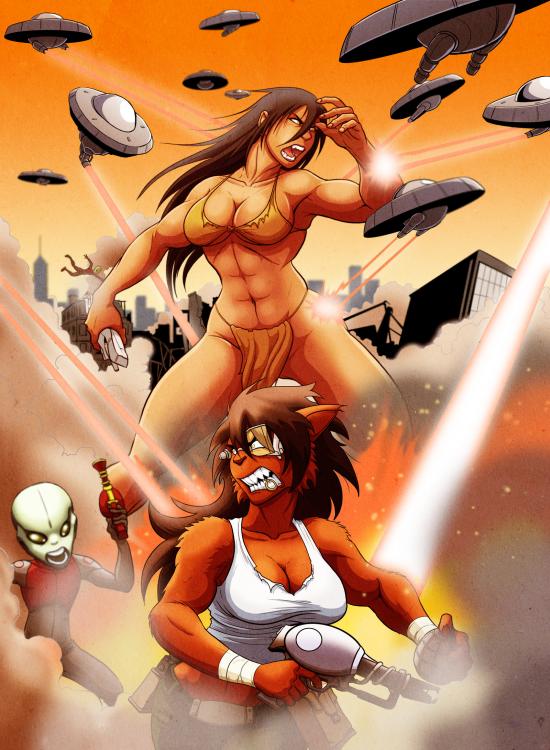
Gogo is a big woman who may or may not be a kaiju herself. https://vanheist.deviantart.com/
-
Ever heard of Gogo?
-
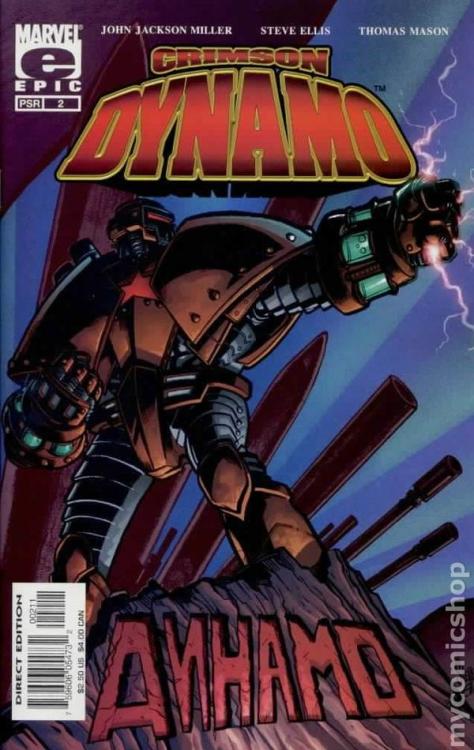
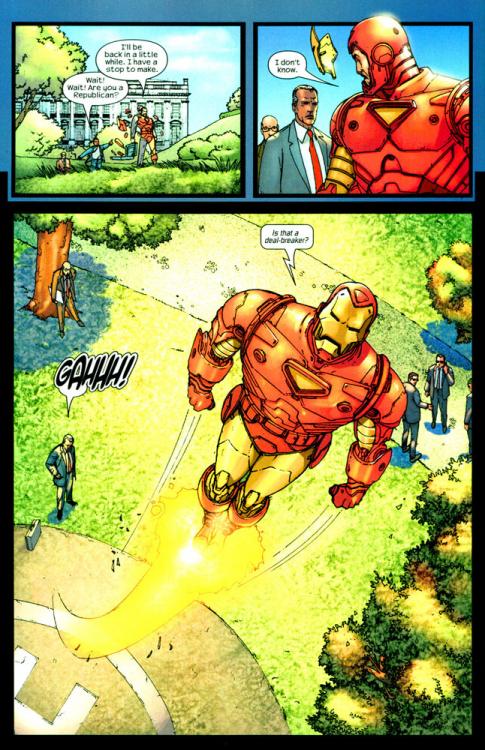
John Jackson Miller's brief career at Marvel Comics started with a portentous mini-series: Crimson Dynamo, in which he cast a Russian teenager as the latest incarnation of the scarlet-armored (anti)hero. When this was well-received, he was asked to write Iron Man. Before this, Miller was more of a writer about comics than of them, but in my opinion that did not hurt. His run opened with a familiar theme: weapons technology malfunctioning and Stark being drawn into it. Tony Stark, responding to an ocean emergency, discovers that something he designed a long time ago has malfunctioned and almost killed the crew of the submarine it was installed on. When he calls the responsible functionary to task for applying his designs without his permission, he discovers that, now that his Iron Man identity is public, the original deal with the government - his designs for the armor would remain sealed and proprietary to him alone - is no longer valid because he and Iron Man are one and the same! An obvious legal technicality, exploited by a ruthlessly ambitious DOD staff member who does not foresee the potential for disaster. The DOD is isolating system after system and appropriating design after design, intending to use them to create a new generation of weapons. Stark pursues legal channels, but when he realizes this might take years and still yield nothing, he takes an unexpected route: he applies to the President for the post of Secretary of Defense. He sells his company and other business interests to prepare for the post, and digs his heels in the sand under the media assault that follows. But as his application makes his way through Congress and the Senate and Tony Stark is subjected to merciless questioning, often by people who have become his political enemies over the years, it is ultimately thrown out, with the Senate commission set to vote him unfit to be a cabinet minister. Just at that moment, disaster strikes; one of the new systems, applied in a drone, malfunctions and targets a US transport aircraft, which is then set to crash inWashington, DC. Rushing out, Iron Man uses the cargo - ironically made up of dozens of decommissioned armors set to be refitted by the DOD - to save the crew, even as he himself literally takes the giant aircraft on his back and lands it in the famous reflecting pool on Capitol Hill, totaling his armor in the process. In the aftermath, the Senate committee, which had not actually voted yet, has unanimously changed their mind - and Tony Stark can be appointed as Secretary of Defense. And the newly-minted secretary is thrown in the deep end right away - a new, unknown terrorist group is striking US installations and transports in Iraq with a mysterious corrosive agent which eats away metal in moments. When Tony Stark goes to investigate, not intending to armor up, he is forced to when confronted with the leader of the insurgent group - a bio-weapon-wielding supervillainess named Vitriol, who reduces his armor to slag with her acid touch! Vitriol is revealed to be a tragic figure - a Kurdish scientist out for revenge on the Iraqi government and the US military for the death of her family. She plans to shower Baghdad with a genetically engineered metal-eating micro-organism, but Stark manages to stop her with the help of Force (remember him) who had his own bone to pick with his former employer. Stark doesn't even get a breather, however, as before he has even gotten on the plane home, he gets a message of disaster: a giant asteroid is heading towards Earth and he is literally the only person who can stop it, using a space ship he commissioned years before for just such an occasion. Not only that, but on the way he discovers he has to contend with the Titanium Man, back for revenge after all these years. As if all of this wasn't bad enough, dark shadows were beginning to manifest on the horizon as Iron Man has to complete a mission under Avengers Mansion - but without informing the Avengers, since at this time they were technically a miniature nation onto themselves, and as a foreign functionary he was not free to reveal mission details to them... Something which became a real issue when the subject of the mission, the Cold War-era super robot Arsenal (model Alpha) was activated and proceeded on its own mission... destroying New York to stop it from falling into enemy hands. Disaster is averted, but there is distrust between the Avengers and Iron Man now... and Tony Stark chafes at his position, to the mocking glee of long-suffering Avengers liaison Henry Gyrich. Soon, however, he would have far worse problems... all Avengers would. *** I have to say I really do like John Jackson Miller's run, short as it was, and I would have liked for it to be longer. But Marvel was entering a new age and there wasn't much room for hope in it. His own insights can be read on this site: http://www.farawaypress.com/comics/ironman.html

-
Can we even call this a 'hiatus' anymore?
-
Me, too - I own too many DVDs not to.
-
Scott intended for Jesus to have been an Engineer, and him being crucified was the action that provoked them into wanting to kill us all. I wish I was kidding. But apparently, that's the level.
-
What I did not like about Prometheus was how dumb it was, mainly. Alien is almost perfect because of how simple it is. The entire movie is a growing, strangling, mounting panic attack at the increasing realization that we should not be in outer space. It's Lovecraftian horror. The title says it all. Then, thirty years later, the same director takes the same movie universe and attempts to tell a completely different kind of story while using the same atmospheric elements - tries to make some deep philosophical points that fall flat on their ass because nothing about them makes sense, it's B-movie science. And even as it fails, it takes a dump on the original movie. Prometheus is Scott's 'Phantom Menace'.
-
Why Prometheus, though?
-
That is insane.