Leaderboard
-
omegaling
Member++2Points130Posts -
river_chaos
Member++2Points814Posts -
Tora Tan
Member++1Points311Posts -
Maze247365
Member+1Points46Posts



Popular Content
Showing content with the highest reputation on 04/08/2018 in all areas
-
After having not watched it over a year and all of the anime I've seen in that time....I can say this: this version of Guyver did not age well. I get that they had a lower budget than the rest of the anime scene, even if there were similar projects on the same level, but there are just some story aspects in just the first episode that do not belong there at all. Malmot being the main point as stated by everyone else, and then there's the opening scene that painted a false set of expectations for the audience (seriously, Cronos didn't thrust the world into a post-apocalyptic setting as we see at the end of the anime series). In any case, later issues that popped up are not as apparent in the first episode, but still it's still mediocre animation at best.2 points
-
2 pointsGame of Thrones fandom: Man, we have to wait SO LONG between seasons! Guyver fandom: Hold my beer.2 points
-
While we patiently and/or impatiently wait for the next chapter of the manga to be released, why not do what the MCU fan-base is currently doing with the lead up to Infinity War and re-watch the 2005 TV series?! Basically, re-watch one episode every week, then discuss it on here. Talk about what you liked, what you didn't like etc. We've gotta keep this board active somehow! All 26 episodes, followed by the 12-part OVA, followed by both live action adaptions... Then hopefully we'll have a new chapter in 40 weeks Episode 1: "The Amazing Bioboosted Armor" Original Air Date: August 6, 2005 Synopsis: Two police officers encounter and are killed by a strange man who is actually a Zoanoid created by the Cronos organization. The Zoanoid stole three Guyver units from the organization and is now being pursued by them. During a confrontation between Chronos troops and the Zoanoid named Malmot, the units are scattered through the area, where Sho and Tetsuro are. The two find the unit and Sho activates it, becoming Guyver I. And go!1 point
-
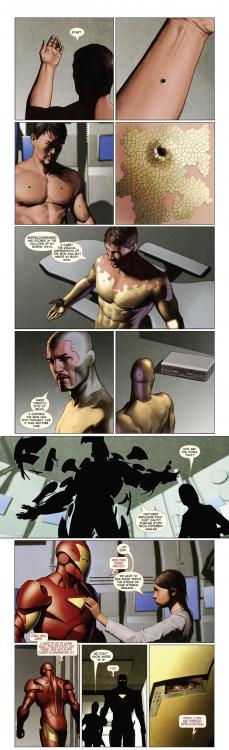
1 pointI once wrote that "Warren Ellis is an arrogant man; he has much to be arrogant about". His bibliography has its own Wikipedia page, and includes such titles as Transmetropolitan, Global Frequency, Stormwatch and its successor The Authority, the Black Summer/ No Hero/ Supergod 'Trilogy' and many Marvel titles, including Ultimate Fantastic Four, the Ultimate Galactus trilogy, Newuniversal, Nextwave: Agents of H.A.T.E. and of course the Iron Man story 'Extremis'. Ellis could do no wrong; he was practically the exemplar writer of the new Dark Age from after 2000, with ultra-violent heroes featuring in superdecompressed stories depicted in cinematic, hyper-realistic artwork. So when we - the fans - heard he was going to be writing 'Iron Man', we were very excited. Ah. 'Extremis' was indeed a mold-breaking story which can be viewed as a threshold between old and new, in a sense; nothing really was the same after it, although this might also be for a different reason which I will cover in the next entry. But in any event, it was completely new, not in the last place thanks to the unique artwork of Adi Granov. Unfortunately this same artwork was also the reason this six-part story arc, the only six issues Warren Ellis ended up writing for Iron Man, took eighteen months to be finished from the first issue to the last. The story is simple enough. Tony gets a call for help from Maya Hansen, an old scientist friend of his. She explains that a project of hers - a super-soldier formula - was stolen; soon it turns out the formula was used by a right-wing terrorist group, who then turn one of them, a man named Mallen, into a superhuman. He attacks an FBI office in Texas, killing dozens with his new power. Iron Man flies out to confront the terrorist, but is defeated and severely injured, while his opponent gets away. Tony reveals he is Iron Man to Maya, and convinces her to use her super-soldier formula on him, to save his life and allow him to face the terrorist on equal footing. This he then does, defeating Mallen who forces him to kill him; and in an ironic coda, he has Maya arrested. He reveals he realized she deliberately let her formula fall into the hands of the terrorists, so that its effectiveness would be publically proven and her funding would be continued. The themes of the story are both simple and serious; what happens if a super-powered human interacts with the real world of ordinary people? What would such a superman do? What if the superman were not a hero, except by his own lights, but a murderous villain? And what about the march of science? The advances of science are always - by definition - ahead of the moral assessments thereof. Warplanes were deployed little more than ten years after the Wright brothers built the first practical aircraft. The first application of nuclear power was the atomic bomb. Maya Hansen argues that she did not intend to create a weapon, but that she needed military funding to further her research. Tony Stark is afraid that he's still that man - not the 'Test pilot for the future', Ellis' own description, but the weapons-maker, the ammunitions dealer. Mallen is the very embodiment of the fear that our technological advancement dramatically outpaces our moral development. And yet, he was a monster created by society; he grew to hate the government because his right-winger family was killed in a shoot-out with the FBI. He wants to use the tools of the future to force a return to the ways of the past. Stark is also confronted with that fear during an interview with John Pillinger, an investigative journalist who has made it his life's work to reveal hypocrisy and deceit, to pull the lid off the world's cess pits so everybody can smell the horrible truth. Pillinger (Actually John Pilger, a real-life journalist) calls Tony a 'ghost of the twentieth century', because the consequences of his actions are still haunting people years after he changed from an arms dealer into the inventor of the future. All in all, the story, while very violent in places, is quite reflective and thoughtful for an Ellis piece. I called the story a 'threshold' ; in fact it is almost a reboot and might, in fact, have been intended as such. Ellis admitted he had (deliberately) not read an Iron Man story except for the very oldest ones, and he is the very first author who re-wrote the origin story completely. No longer was Tony Stark injured by a booby trap in Viet Nam either during or after the war, but rather in Afghanistan during the American invasion of that country. It was ballsy, but in retrospect I almost wish more authors had gone with this; Marvel, unlike its counterpart DC, has never had a true 'Cold Reboot', instead opting for a shifting timeline which actually moves ahead through history in the context of the story. While I view the story, while simple, as quite strong, I remember being disappointed back in the day. I had hoped for so much more. But still, Ellis had recast Iron Man for the 21st century, and whatever else came after, would have to contend with what he had done. Even so, another event would have much more radical consequences for Tony Stark... *** On a side note, the comic - and the art style - would profoundly influence the Iron Man live action movie, which came out three years later. Scenes and situations were lifted almost directly from the pages of the comic, while the concept and some of the characters were later used as the basis for Iron Man 3.
 1 point
 -
Ah what the heck, I'll tag in for this to. I'm going to be review this as I go through the episode. Guyver Episode 1: The Amazing Biobooster Armour. Watching it now I'm 50/50 on the intro. On the one hand is kind of a massive spoiler, especially for first timers, to show that the bad guys are going to take over the world. You now have that information hanging over the entire series which dose pull the rug out of the narratives tension as the story progresses becuase while you don't know how things got this way, you know they will. This undercuts the surprise at the second story arc's beginning to. On the other hand, one of guyvers biggest issues is that its opening arc is very much a monster of the week style story. While its done better then virtually any version of that I can think of (and I'd explain my view point on this as we go through) this can be a turn off for new comers or at least put them in the wrong mind set, especially if they are jaded or cynical to the idea. This at least gives them a taste that there's more going on here then "bad guys send random monster to fight hero". Guyver dose a good job of getting this across anyway, the OVAs doing the best, but I do feel that due to the way this series portrays the first arc this little taster just helps it get the point across. Also from someone like myself, who had watch the OVA's and movies but was totally ignorant of both the manga and rest of the story, this was pretty dame awesome to see after years of nothing and really got my mind going. While I never thought about it much back in 2005, due to the fact that I'd kind of fallen out of the anime circle for a few years, this show dose come off a cheap looking, especially early on. While not terrible by my personal standards, this series defiantly has the weakest animation out of the three, even compared to the original "Out of Control" OVA. However its not the only one, about this time both Mermaid Saga and Demon Lord Dante came out and both were of similur quality, so it seems like a number of old properties were getting shows done on lower end budgets back then. Malmots opening scene is not bad. It's creepy and unlike the truck driver from the original story I actually feel sorry for these poor cops. However it lacks the true horror and shock other portrayals of this scene have. Having Malmot not transform proper is just weird, I don't really see the point of hiding the fact he's a zoanoid. Especially after the intro. While I don't mind it to much, I never really understood some of the changes made to the casts designs. I can only guess it was done to modernise the show but it seems a bit pointless in hind sight. Upside I'm really happy we get to see Sho and his father together from the start, Fumio is such an important character in the second arc and it really helps the story as a whole to have him and Sho interacting as early as possible. I have to agree that the cast sounds a bit wooden at this point but Chris Patton and John Swasey were ok picks for the characters I feel. Luci Christian is a pretty good pick for Mizuki and sounds ok but she's clearly lacking the experience she has now days. She's currently doing a great job as Nami in One Piece. On the flip side whoever is doing the voice for the council member reading out the agenda makes me want to stab pins in my ears. Of the main caste so far Brian Jepson as Agito is probable the best. Lowell Bartholomee as Tetsuro is not bad but something about his voice sounds.... off. The confrontation between Malmot and the Chrono Solders feels rushed or at least to short. They try to compensate by telling us that Malmot has a family but it really dose not make me feel as sorry for him in this version. All his counterparts seem so broken and desperate that its genuinely heart-breaking to see him beaten down then resort to suicide. This version just lacks the same gut punch. His cold blooded murdering of innocent cops make me less sympathetic to, yes his reasons are the same but his attack on the truck driver always felt more justified, especially in the manga. While the scenes fly by the goons, Malmot and especially Gregole all look fantastic but again the transformations and reveals just lace the proper spectacle. Sho's bonding with the Guyver, while not bad per say, dose lack the impact other versions of this scene do. This is all again due to the break neck pass we are moving at and the shows lower budget. However I do find it interesting that in this version Tetsuro genuinely shoulders some of the blame for Sho becoming the Guyver. Guyver 1's reveal suffers from the same problem I mentioned above, its to fast paced and its given none of the spectral and atmosphere is should. That being said the Guyver looks pretty great and the actual fight with Gregole is not bad either. Now there's no getting round this point, the 2005 anime is by far the tames version of Guyver. While it dose not shy away from a little blood, it far from the ulta violence the franchise is known for as we don't see Gregole get his head pulverised (Your can is packed tunaman!). For the ending I'd just be repeating myself, its ok but again the speed the story is moving at prevents it from having the proper build-up and atmosphere it should have. As for music and sound effects, all pretty ok but nothing to stand outish. For an over all score I give this a 3/5. I'm being lenient as this was the first episode and everyone's just getting started. While it was great for guyver to come back looking at it objectively is a very "average" way kick off the series. While there's nothing out and out bad, the animation is what it is, there's nothing really great about it ether. Manga Comparison: In a way this stays pretty close actually. While 33 pages long, the opening chapter of Guyver is pretty fast past in its own right and Episode 1 actually has more happen. However the manga's art style dose a far better job at setting the mood for the key scenes of the story. Also while the added scenes allow the episodes narrative to flow better, ironically this takes time away from key scenes making them feel rushed and less dramatic.1 point
-
I like your reviews because it makes me feel like I am not alone. I am sure I have watched this whole series before but I don't remember clearly. watching it this time, the series is WEIRD. I tried to compare it to other anime and I just can't seem to find a match. the pacing, the sound, the content of it, just feels incredibly vacant. I was thinking it is possible that it is Allegory for Sho's life. we see him from near the start and is a bit of a douche to his dad. but then I thought.. this is suggesting that he is depressed and without focus in his life. the following scenes seem to reinforce that. it's not very tight though and I feel like it could be easily missed. Or I could just be wrong. I also felt like the characters were introduced very vaguely. Each time a new character was introduced I felt like it wasn't really clear who they are or if they are important. the music too, was absent for a lot of the time. the whole thing had this vacant ethereal aspect to it that was neatly topped off with the stoned woman talking at the end for the next episode preview. The monsters were quite well drawn but I agree there was a lot of missing animation for the first episode. it's supposed to make a good impression and I think it fell short.1 point
-
Absolutely not because it wasn't a very good adaptation. I've actually spent the last few weeks re-watching numerous Guyver clips (gotta stay interested somehow!), mostly of scenes that have been adapted numerous times into anime and the 2005 series ALWAYS misses the mark. I can't actually be bothered to watch the whole of the first episode of the 2005 series but I watched the key scenes earlier this week and while, yes it's well drawn (most of the time), everything lacks punch and emphasis. The changes to the manga don't offer anything positive to the narrative or watching experience. Turning the truck driver into two police men makes for a fess interesting situation, and even though the driver was an asshole in the manga you could at least relate to the fact that he was just a guy in the wrong place at the wrong time. Making Malmot a family man was also completely uninteresting because it wasn't developed - why should the viewer care about this guy when all they've seen from him is the murdering of the two police men? He was more pitiful in the 12-part OVA just by having him talk to Agito on the phone at the beginning of the episode. Malmot's transformation is done okay, and he's actually drawn extremely well, but Gregole's transformation lacks any emphasis. It looks like they just didn't want to go through the effort of making it more dramatic so they have him transform far from the camera so they could skimp on the details of it. Same thing goes for their fight - I can only imagine they didn't want to go through the effort of animating the arm wrestling match so instead we get... basically nothing before Malmot blows himself up. Out of Control's fight on the other hand is unbelievably well animated for something that came out 30 years ago. Removing the arm wrestle completely ruins the setup for the wrestle with the Guyver; the power scale from Malmot - Gregole - Guyver is less evident. Sho bonding with the unit is slow and lacks the dynamism it had in the 12-part OVA. The fight with Gregole looks amazing and thank goodness they kept the arm wrestle this time but what is with Gregole aiming his punch to the side of the Guyver's head? I imagine it's supposed to represent the Guyver dodging the punch but he doesn't move at all. And the finish of the fight also makes me feel like, once again, they just couldn't be bothered to animate the Guyver's last attack, so creating that moment of suspense was the easy way out. I appreciate it must be an absolute nightmare animating Guyvers and Zoanoids but if they got it right 30 years ago pre-digital animation then there's absolutely no reason they shouldn't be able to do it now. If the budget was too tight then they may as well have not done it at all. Maybe it's just one of those series that needs that 80s/90s anime grit to work. The English voice acting is also pretty bad - the delivery is often flat and the quality difference between the JP and ENG acting gets pretty bad in some parts of the series. (For the record I'm not always opposed to english voice acting - FMA has a great dub). But this is a more general criticism rather than being directed to the first episode specifically. That said, I disagree with you Maze on the soundtrack. It's not as good as the 12-part, but it's still pretty cool. I like the idea of this thread, I might play along for a little while but it's hard to stay entertained while watching this series. I would never recommend it to anyone wanting to get into Guyver - at least not until the last few episodes.1 point
-
I'm not the biggest fan of the 2005 version but I'm doing this for you, Guyver fans! Guyver TV series episode 1 review (Japanese language): I think right off the bat it was wrong of the series to tease/spoil both the conquest of Earth and Guyver gigantic at the beginning of the episode. We're talking about 2 really huge spoilers in the manga. I'm okay with them "modernizing" Guyver for a new generation, but I don't see why they had to change both the art style and the character's personalities. This is a problem for me because I want to be able to look at the main characters and say "oh hey that's sho fukamachi" or "look that's mizuki segawa", but these changes are having the opposite effect and they seem very foreign to me. I have to get used to them all over again, and I can't really have any familiarity with them once I cross over to the manga again. Enough bad stuff, how about some good news? While the animation may not be as fluid, I think the zoanoid and Guyver art is better and more consistent in this series. I would have liked a little more color, but all of the scenes with zoanoids and Guyver I were pretty good. The music's nothing special, but at least it had that "hero is coming to save the day" feel to it still. I think that's what matters most in this episode. So yeah, I think I'll be watching the series more for just enjoying the Zoanoid/Zoalord/Guyver stuff and sort of ignoring the situations of the main characters because they just feel different to me now. Was I too brutal? Should I be more positive in the next episode review?1 point