Leaderboard
-
Salkafar
Member++1Points1,339Posts -

jerrygoodman
Member++1Points1,240Posts

Popular Content
Showing content with the highest reputation on 12/23/2016 in all areas
-
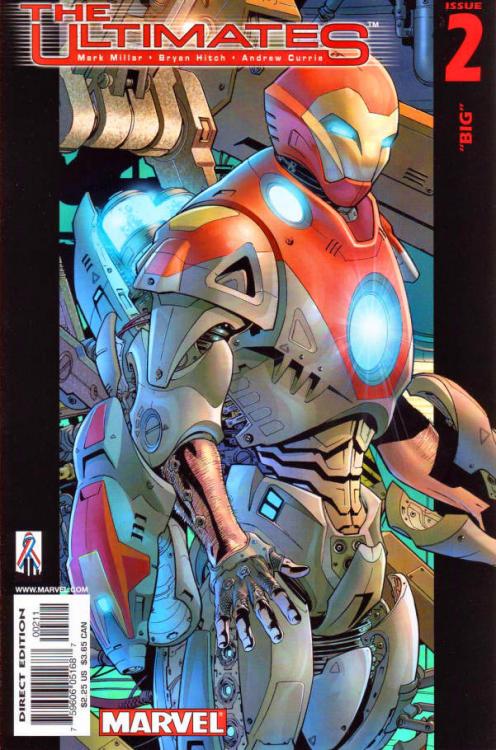
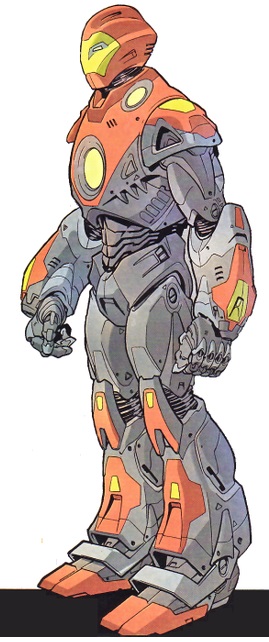
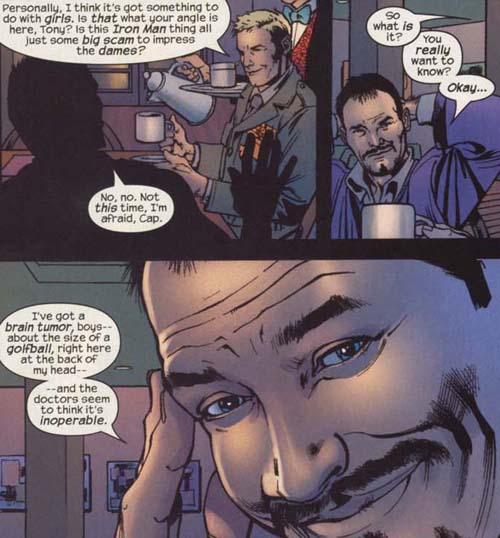
1 pointThe period from the late eighties - say, the days of 'Secret Wars', 'Crisis on Infinite Earths', 'The Dark Knight returns', 'Batman: Year One' and perhaps most seminal of all, 'Watchmen' - onward was called "the Dark Age of comic books" until about the year 2000. The age itself - in retrospect - ended around 1997, long after the tendency in comics to become more realistically violent had degenerated into absurd extremes and self-parody; the final end of this period, to me, was marked by Marvel's "Earth-X". I have already called this time the 'Dork Age' - not only because it was objectively, but because of what has come since, and which I call 'the Dark Age' of comic books and which, I believe, truly started in the year 2000, at the very least at Marvel comics. In the year 2000, two things happened which I view as watermarks - one big, one less so. The lesser one was the introduction of the Sentry to the Marvel universe. The Sentry event comprised a mini-series which told the story of a Superman-like hero who had actually preceded all the other heroes at Marvel Comics, but had been forgotten for some reaso. In the real world, the claim was that this reflected real events, in the sense that the Sentry had been created by Stan Lee before even the Fantastic Four, but it had never panned out and the character had been forgotten (in fact this was a hoax). The atmosphere in the comic was so unique and outlandish and bleak that, although the Sentry was forgotten once more, his return to comics was inevitable. And it was as if something truly dark had entered the Marvel universe. The second, more important thing that happened in 2000 was the creation of the Ultimate Marvel imprint. After a flashy start and a disappointing followup, independent superhero comics had evolved some truly interesting things (involving people like Alan Moore and Warren Ellis and Mark Millar, to name but a few - perhaps not coincidentally all British). Marvel Comics, for its part, was in dire straits. Sales had plummetted to a quarter of what the company had sold at its peak. It was felt that, in order to appeal to a desperately-needed younger audience, perhaps a reboot should be considered. But how? Bill Jemas and Joe Quesada, brainstorming together, decided to simply launch a new line of comics featuring the classic Marvel heroes in a completely new reality - as if the Marvel age had begun in 1999 instead of 1961. They would not replace the originals, but exist parallel to them. The Age of Apocalypse comics in the X-Men franchise and the Heroes Reborn project for the Avengers and the Fantastic Four - which had met with varied responses - could be said to have served as prototypes. But this was total commitment. Total freedom. No previous continuity, only concepts. There were few expectations. At least one writer felt he was working on "the last Marvel comics", which was certainly not impossible. Obviously, that's not how it worked out. 'Ultimate Comics' took off incredibly, starting with Spider-Man and the X-Men, and soon the Fantastic Four... and the title most relevant to this thread, 'Ultimates'. The Ultimates were the Ultimate universe's equivalent of the Avengers, but they did not come together by accident, like before - instead, they were gathered deliberately by SHIELD as a superhuman reaction force to superhuman threats, such as Magneto. Ultimate Iron Man - who received several mini-series of his own, apart from having a prominent role in the 'Ultimates' comic - was quite different from his original counterpart. For one thing, he was likable from the start; an endearing combination of vulnerability, boyish flippancy and matter-of-factly supergenius. He was, like his counterpart originally had, suffering from a severe health issue - except not an injured heart, but an inoperable brain tumor which would inevitably kill him in the end. That was the set-up, anyway. He had created a weapon originally to save his life in a hostage situation, but had only built the Iron Man armor to become a superhero (actually... for an imprint intended to cut away continuity problems, the Ultimate universe had a serious problem with them almost from the start, with Iron Man especially suffering from a lot of conflicting information. I put this down to indie writers not being used to considering other people's writings). Ultimate Marvel was the shot in the arm the company needed. In fact it became so big that at one point, there were rumors that it would replace the original continuity altogether. This never happened, however... and eventually, the Ultimate continuity would meet with similar problems as its predecessor. But, in the early days, particularly 'Ultimates' felt like the future of comics. Incredibly audacious, entirely removed from old-fashioned superhero comics conventions, wide-screen cinematic and considerably more realistic, it rung in a new evolution; superhero comic books that seemingly had grown up, as other, less fantastic genres had already done. The main line comics would have to catch up somehow. Darkness was on the horizon. Big things were coming.
 1 point
 -
Okay, let's shake things up and put in a really obscure contestant...PRIME! Hailing from the all-but-forgotten Ultraverse, Prime (real name Kevin Green) has been billed as his world's strongest hero. Green's abilities are derived from an organic "liquid flesh" from his torso. When it forms around him, Prime possesses tremendous physical strength, exceptionally high resistance to physical injury, and can fly at Mach-level speeds. His only real limit to his powers appears to be his imagination, or his attitude toward heroism at any given time.1 point
